REPRESENTATION IS A RENTAL
The next era of Black imagination won't be built in Hollywood boardrooms, it'll be built by the creators daring to imagine new myths.
We’ve mistaken access for ownership. Black audiences have been conditioned to believe that the scraps of representation handed down from white-owned studios are liberation. We cheer every casting announcement. We trend every first. Every milestone. Every “bout damn time.” As if permission were the same thing as power.
But representation without ownership is only a lease. And leases change whenever the landlord decides they do.
Consider Wonder Man.
Simon Williams was never Black, but Marvel reimagined the character, casting Yahya Abdul-Mateen II in the lead. Critics loved it. Audiences loved it. And now, by all accounts, the series is over after a single season, not because it failed, but because Marvel decided to invest elsewhere. What was the point in making him Black?
Marvel has spent years asking Black fans to fall in love with heroes whose futures remain perpetually negotiable.
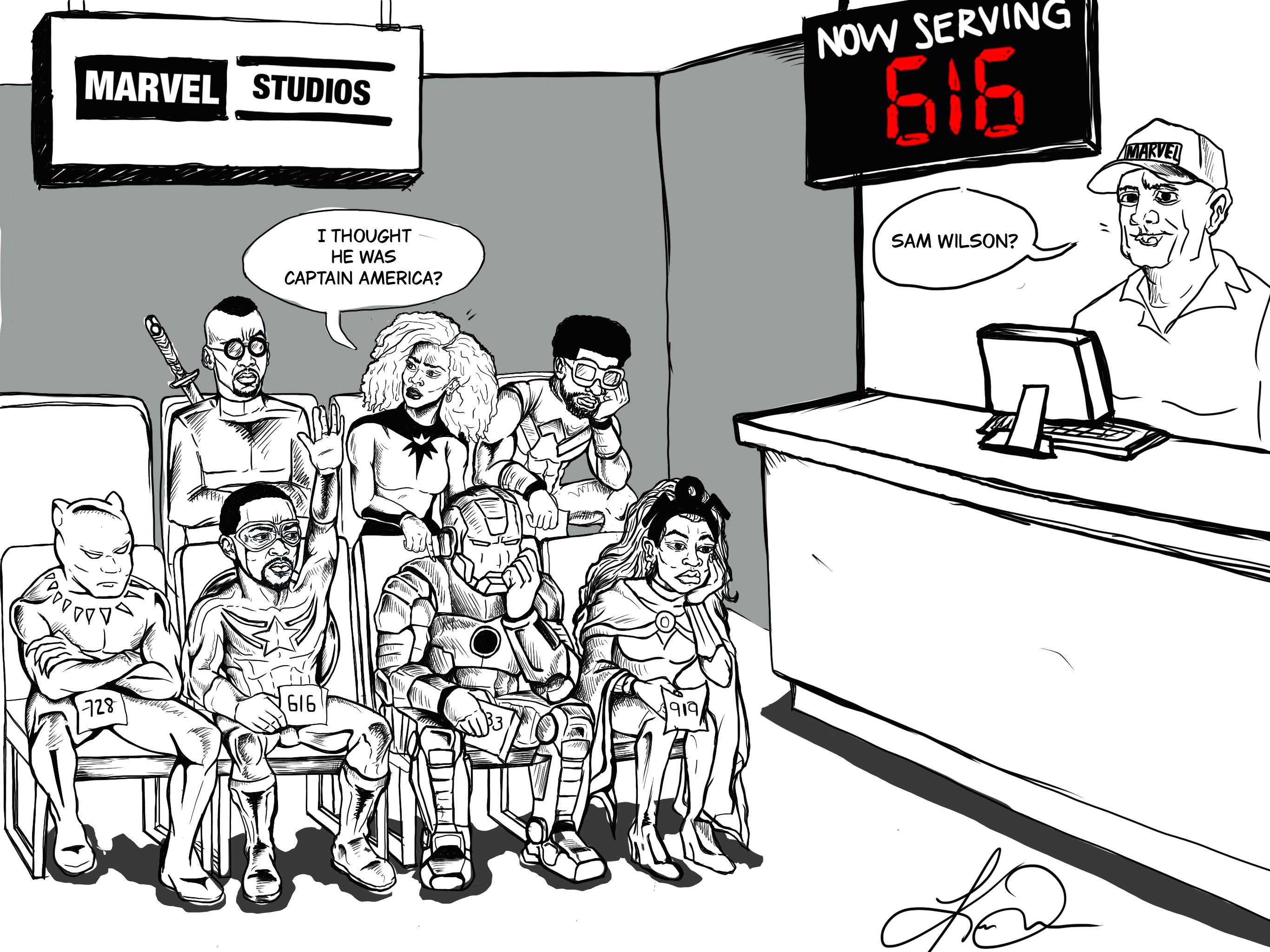
Sam Wilson earns the shield after a decade-long journey, only for the conversation around him to become another manufactured culture war. Barely one film later, Steve Rogers is already back at the center of the franchise.
James Rhodes waits in development purgatory. Armor Wars shifts from series to film to almost myth. Meanwhile, rumors of another Iron Man movie spread online, reminding audiences which armor Marvel truly values.
Monica Rambeau, one of the most powerful characters in the Marvel Universe, a woman capable of transforming herself into any form of energy, was finally positioned for what appeared to be a major role after The Marvels. Yet rumors surrounding Avengers: Doomsday suggest Spectrum may be killed off-screen. Whether those rumors prove true is almost beside the point. The fact that so many fans find them believable says something about the expectations Marvel has created around its Black heroes.
And Blade?
Mahershala Ali has been waiting since 2019. Directors leave. Writers leave. Release dates disappear. One of the most important Black superheroes in comic history remains frozen while the machine keeps moving.
Taken individually, these could be dismissed as ordinary Hollywood production problems, the inevitable growing pains of a franchise as massive as Marvel.
Taken together, they begin to look like a pattern.
If Black Panther proved anything, it was that Black stories were never the financial risk Hollywood claimed they were. The film earned over a billion dollars.
Children arrived in African dress. Adults cried in the theater. Entire schools bought out screenings. Wakanda stopped feeling like a comic-book setting and became a cultural landmark.
Black Panther wasn’t simply successful. It became sacred to Black people.
Which makes everything Marvel did afterward all the more revealing. The studio didn’t just lose Chadwick Boseman. It decided that T’Challa should end with him. The films kept the title. They abandoned the title character. That decision has always struck me as unusual because Hollywood almost never treats its myths that way.
Batman gets recast. Bond gets rebooted. Superman gets reimagined. T’Challa gets eulogized.
Even inside the Marvel Cinematic Universe, William Hurt’s death didn’t stop General Ross from continuing his story. Harrison Ford stepped in. Ross became Red Hulk. The mythology continued. Apparently that privilege wasn’t extended to T’Challa. Instead of becoming the first Black superhero to headline a full trilogy, he became the only Marvel icon whose story ended after one solo film.
That choice says something, not just about grief, but about permanence. Who gets to become myth? Who gets to outlive the performer? Who gets treated as larger than any one actor? Those questions become even more complicated once you consider how the films reshape Wakanda itself.
In the comics, Wakanda’s power comes from resisting colonial powers. In the films, the CIA repeatedly becomes one of its closest allies. That’s more than a plot point. It’s an example of how blockbuster filmmaking often domesticates radical Black politics, transforming liberation into something safer, friendlier, and easier to market.
I should probably disclose my bias.
I have an entire Storm tattoo sleeve. Clearly, Ororo Munroe isn’t just one of my favorite superheroes. She’s one of my favorite fictional characters, period. And I don’t think it’s controversial to say she’s arguably the most iconic Black superheroine ever created. She has led the X-Men. She has defeated gods. She has been worshipped as one.
Which is why X-Men ‘97 feels so frustrating.
The series has its moments of excellence. And yet, across its first two seasons, Storm repeatedly feels like a supporting player in stories that could just as easily have revolved around her. She gets spectacular powerscaling moments.
Then the narrative drifts back toward the same familiar center of gravity. The problem isn’t that Wolverine, Magneto, and Professor X receive attention. They should. The problem is that Storm still struggles to become the character the story bends around.
That’s the difference between representation and authorship. Between appearing in the story and defining it. Marvel clearly understands that audiences love Storm. What it still seems reluctant to imagine is a Marvel universe where she is unquestionably its center.
For me it’s not about Marvel or DC or Disney. Corporations don’t have obligations. They have quarterly earnings.
They don’t love these characters. They own them.
Those are two very different relationships.
There is nothing wrong with loving Storm. I certainly do. She’s tattooed on my arm forever. There is nothing wrong with loving Blade, Black Panther, Static, Monica Rambeau, or every Black hero who made some lonely Black kid feel seen.
I owe many of those characters more than I can articulate.
But I’ve stopped expecting the companies that own them to share that love.
The future of Black imagination won’t be secured by waiting for billion-dollar corporations to finally do right by characters they own. It’ll be secured by the people creating characters they never will. If Marvel teaches us anything, it shouldn’t be to stop loving Black superheroes. It should remind us to support the people creating the next generation of them.
Those are the people worth believing in.
Because the future doesn’t belong to the companies that own yesterday’s myths.
It belongs to the people creating tomorrow’s myths.
So if you’re wondering where to start, here are a few Black creators and Black-owned comics I think deserve your attention.
Captain Zero
Publisher: Cutting Edge Animation / Captain Zero
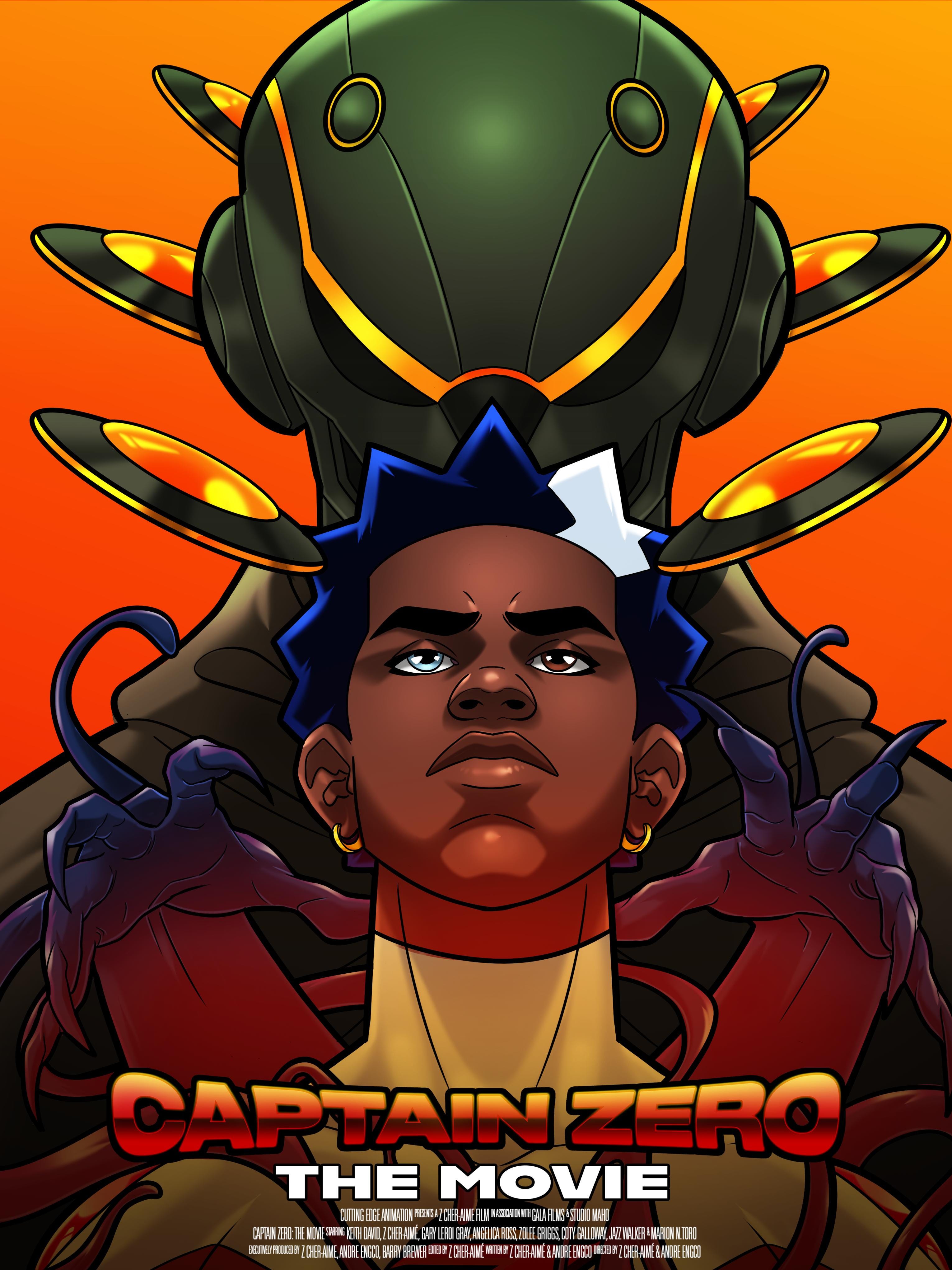
Created by Z. Cher-Aimé and Andre Carl Engco, Captain Zero introduces readers and viewers to Xerxes Hughes, a Haitian American teenager struggling to balance high school, family, mental health, and the overwhelming responsibility of being a superhero. Framed through therapy sessions, the story blends classic coming-of-age superhero storytelling with an honest exploration of depression, anxiety, and self-worth. Rather than treating mental illness as a weakness to overcome, Captain Zero externalizes those struggles, literally transforming them into monsters the hero must confront. The series’ primary antagonist, the terrifying Depression Demon, is voiced by the legendary Keith David, whose commanding performance gives emotional weight to a villain that represents the darkest corners of Xerxes’ own mind.
What makes Captain Zero especially exciting is its ambition. It isn’t interested in recreating Marvel or DC, it is building a new mythology centered on a young Black hero whose greatest battles are both cosmic and deeply personal.
The Antagonists
Publisher: Godhood Comics
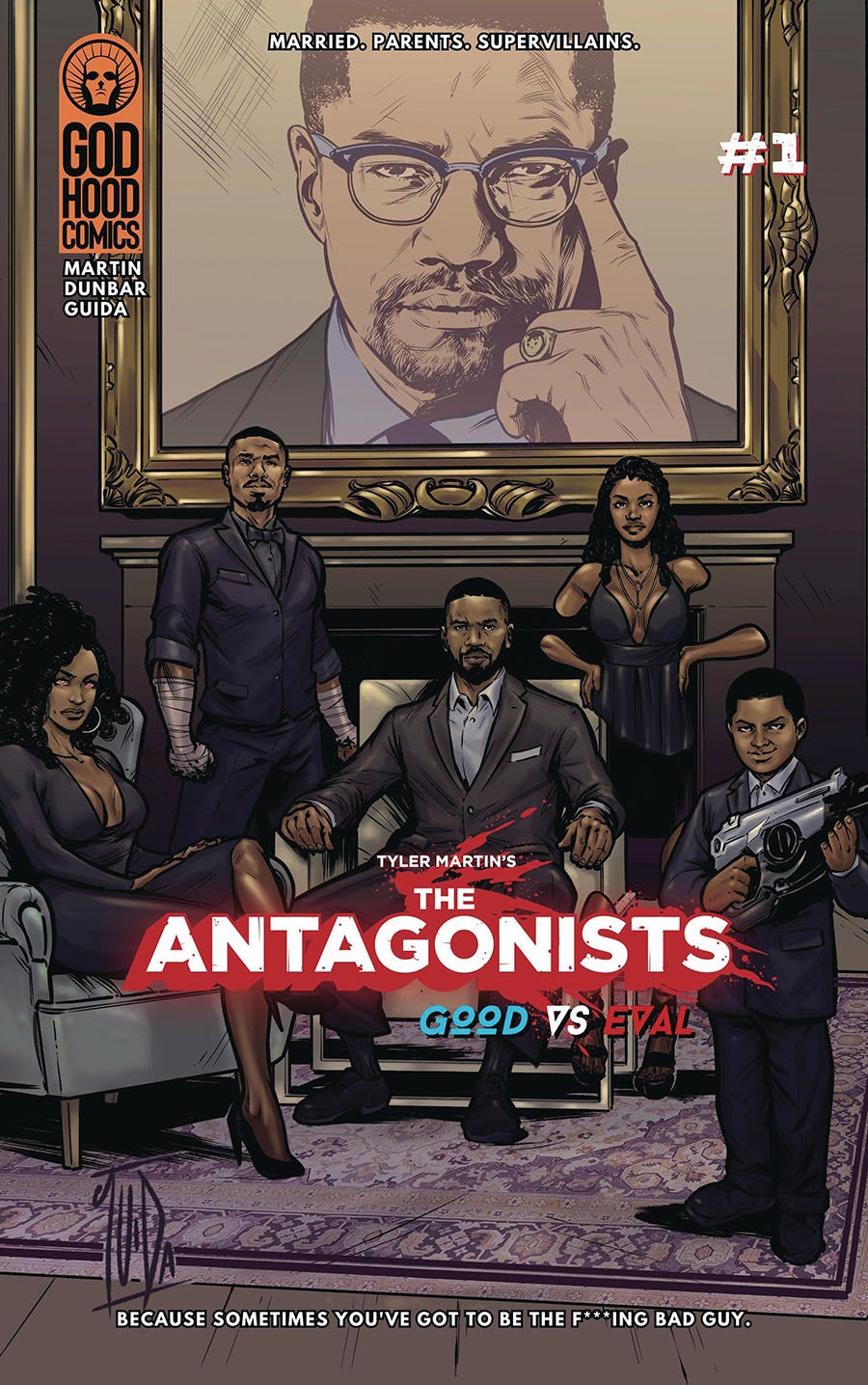
Imagine if the world’s greatest superheroes weren’t celebrated, but hunted. The Antagonists flips the traditional superhero narrative on its head by centering a Black family forced to navigate a society that fears and criminalizes extraordinary power. Rather than asking what it means to save the world, the series asks what it costs to survive in one that has already decided you’re the villain. Equal parts family drama, political thriller, and superhero epic, the book explores generational trauma, identity, and the ways systems manufacture enemies to preserve themselves. The action is kinetic, but the emotional core lies in the relationships between parents and children trying to protect one another while carrying impossible expectations. Like the best speculative fiction, The Antagonists uses superpowers to examine real social structures rather than escape them. If you’ve ever wanted superhero stories that feel less like corporate spectacle and more like urgent contemporary fiction, this is one of the strongest places to begin.
Bitter Root
Publisher: Image Comics
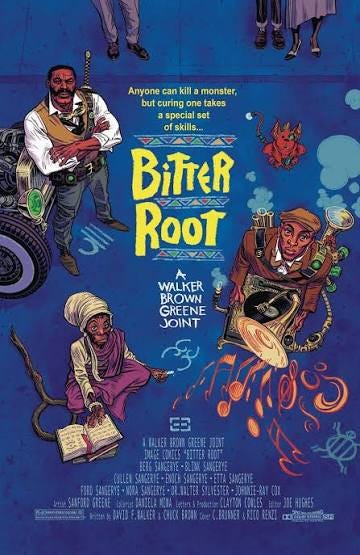
Created by David F. Walker, Chuck Brown, and Sanford Greene, Bitter Root is one of the defining Black fantasy comics of the last decade. Set during the Harlem Renaissance, the story follows the Sangerye family, monster hunters who battle grotesque creatures born from hatred, racism, greed, and prejudice. Rather than treating monsters as external threats, the series argues that America’s greatest horrors have always been human ones. Every fight becomes both a supernatural battle and a meditation on generational trauma, forgiveness, and survival. Greene’s expressive artwork blends pulpy action with horror and Afrocentric aesthetics, creating pages that feel alive with movement and emotion. Bitter Root effortlessly balances humor, history, and heartbreak while never losing sight of its central question: how do we heal a world poisoned by hate? It is simultaneously one of the most entertaining superhero-adjacent comics on the shelves and one of the most politically resonant.
Excellence
Publisher: Image Comics
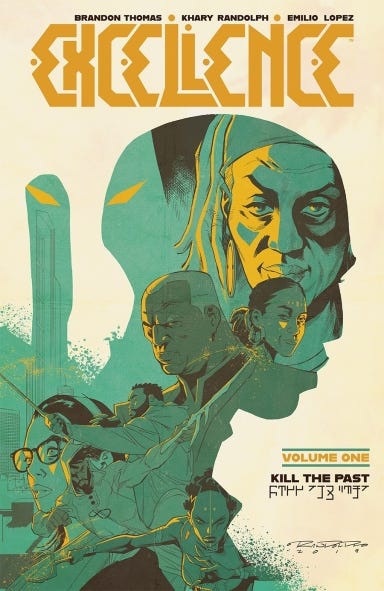
Brandon Thomas and Khary Randolph’s Excellence asks what happens when Black excellence becomes an institution rather than a slogan. In this contemporary fantasy series, magic is controlled by the Aegis, a secret society of Black magicians whose gifts have historically been used to maintain wealth and influence for Black elites. Spencer Dales, the son of one of the organization’s most respected members, begins questioning everything he’s been taught about power, legacy, and obligation. What follows is part coming-of-age story, part political thriller, and part magical revolution. The comic explores class divisions within Black communities, generational conflict, and the burden of inherited expectations while delivering some of the most stylish magical combat in modern comics. Randolph’s kinetic artwork and Thomas’s sharp dialogue make Excellence feel fresh, contemporary, and deeply invested in questions of community rather than simple good-versus-evil storytelling.
Killadelphia
Publisher: Image Comics
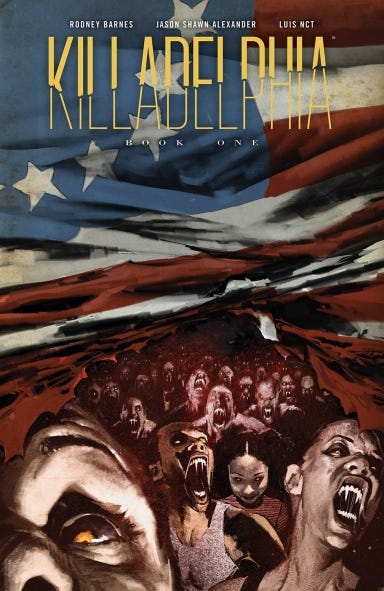
Rodney Barnes and Jason Shawn Alexander transform the vampire myth into a meditation on American history in Killadelphia. Set in a city where the undead quietly manipulate politics, policing, and wealth, the series follows Detective James Sangster as he uncovers a conspiracy stretching back to the nation’s founding. Rather than treating vampirism as simple horror, Barnes reframes it as a metaphor for systems that consume generations while enriching those already in power. Historical figures, including a vampiric John Adams, appear alongside contemporary characters, collapsing centuries of American violence into a single ongoing nightmare. Alexander’s haunting artwork creates an atmosphere of constant dread, making every page feel simultaneously beautiful and unsettling. Killadelphia is one of the smartest horror comics published in recent years because it understands that America’s monsters have never truly stayed buried.
Icon & Rocket
Publisher: Originally Milestone Media / DC Comics; currently published through DC Comics’ Milestone imprint
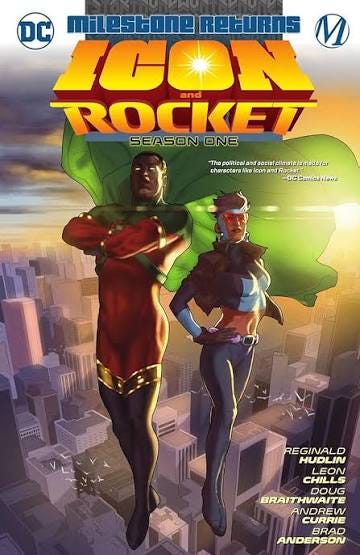
Long before cinematic universes embraced Black superheroes, Icon & Rocket quietly redefined what superhero comics could be. Created by Dwayne McDuffie, Denys Cowan, Mark Bright, and Derek Dingle, the series follows Augustus Freeman IV, an alien who has lived as a wealthy Black conservative businessman for generations, and Raquel Ervin, a brilliant young activist who convinces him to become the hero his community actually needs. Their ideological disagreements are the story’s greatest strength. Rather than presenting simple answers, Icon & Rocket stages thoughtful debates about race, class, capitalism, justice, and political responsibility while never forgetting to deliver exciting superhero action. Rocket constantly challenges Icon’s worldview, forcing both characters, and readers, to reconsider what heroism really means. Decades after its debut, the series remains one of the most intellectually ambitious superhero books ever published.
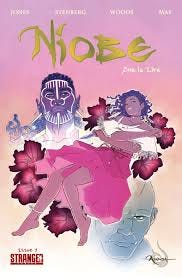
Niobe
Publisher: Stranger Comics
Created by Sebastian A. Jones and Amandla Stenberg, Niobe follows a young half-elf warrior navigating a richly imagined fantasy world inspired by African, Indigenous, and multicultural traditions rather than conventional medieval Europe. Across multiple series, Niobe struggles with questions of belonging, prejudice, destiny, and leadership while confronting monsters, political intrigue, and ancient magic. The world-building is expansive, but the emotional focus always remains on Niobe’s search for identity in societies determined to define her before she can define herself. Stranger Comics builds an ambitious mythology that feels distinct from traditional Western fantasy while embracing epic adventure, memorable characters, and breathtaking artwork. Readers looking for fantasy that expands the genre’s cultural vocabulary will find Niobe to be an excellent gateway.
BLACK
Publisher: Black Mask Studios
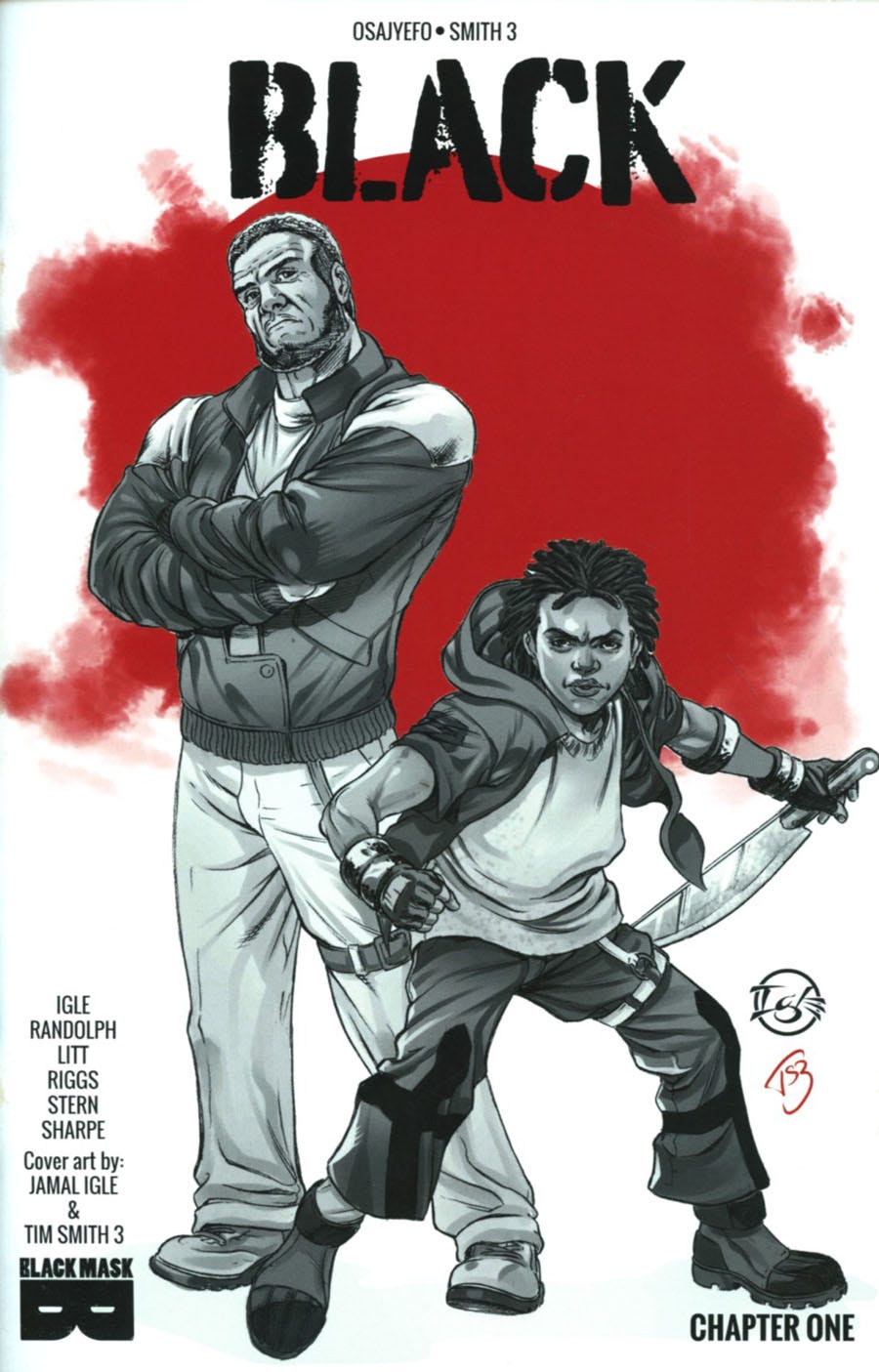
Created by Kwanza Osajyefo and Tim Smith 3, BLACK begins with one deceptively simple premise: what if only Black people developed superpowers? From that foundation emerges one of the most provocative superhero comics of the modern era. The series follows Kareem Jenkins, a teenager whose newfound abilities thrust him into a hidden world where governments, law enforcement, and underground organizations all compete to control, or eliminate, Black superhumans. Rather than treating powers as wish fulfillment, BLACK explores surveillance, state violence, racial profiling, and collective liberation. The question isn’t merely who has power, but who society permits to possess it. As the series expands through sequels and spin-offs, it broadens its examination of identity, resistance, and community while remaining grounded in deeply human characters. It’s one of the clearest examples of speculative fiction using superheroes to interrogate contemporary racial politics rather than escape them.